Such cars, on which technologies of future models are tested, rarely leave the walls of companies and become available for public trading.
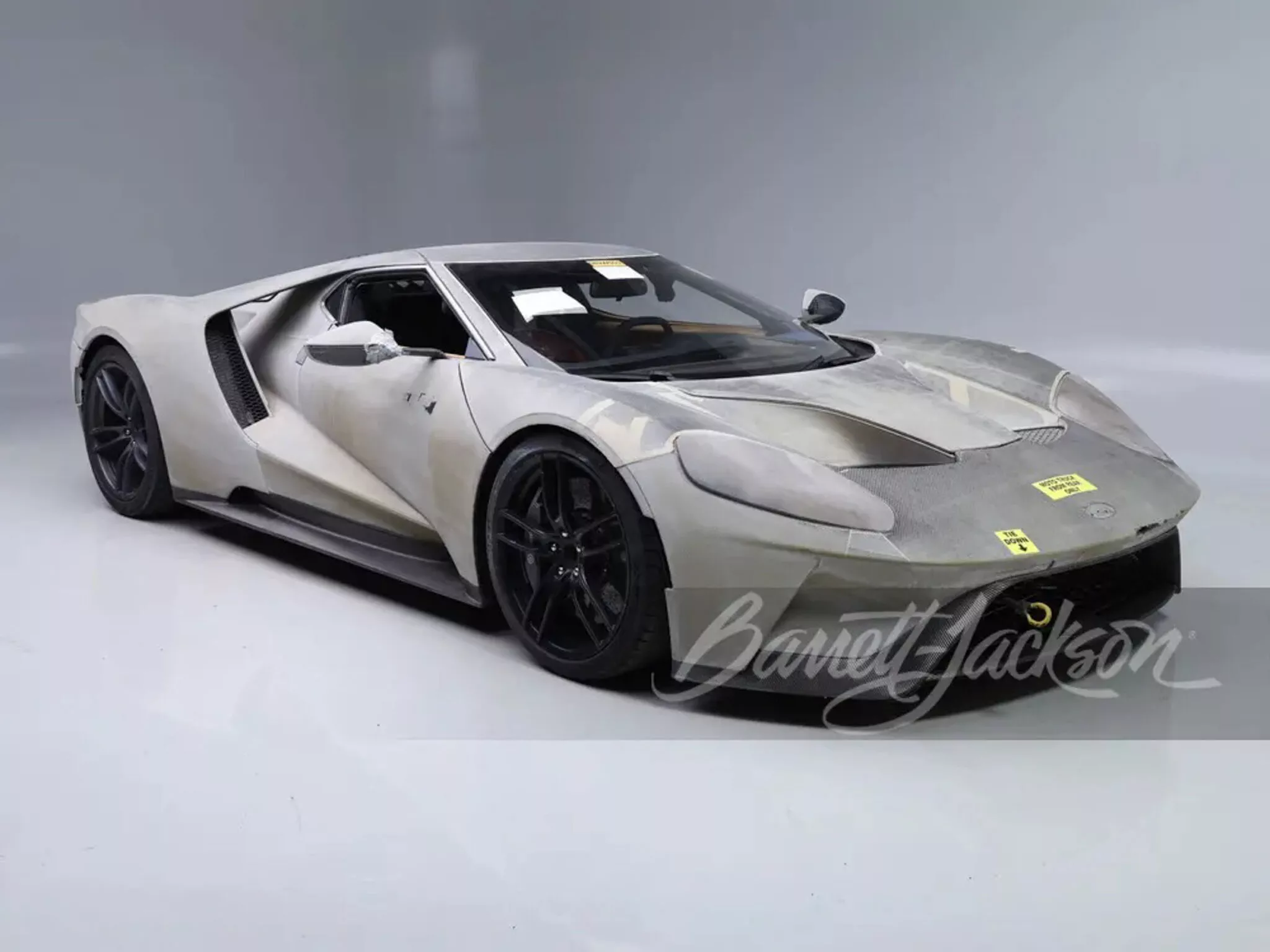
The main nuance is that according to the law, this prototype is prohibited from driving on public roads. The car was assembled at the end of 2015 and was used to debug the power plant and carry out calibrations at the initial stage of development. The carbon fiber body is not painted—test data was a priority, not appearance.
The technical content corresponds to the serial version. The car is equipped with a 3.5-liter bi-turbo V6 EcoBoost engine paired with a 7-speed dual-clutch automatic transmission. The design includes a carbon fiber cabin capsule, double wishbone suspension, adjustable ride height, active aerodynamics and powerful carbon ceramic brakes.
The interior is designed in a racing style, with a carbon bucket seat, adjustable pedals, a digital instrument panel and a steering wheel with Formula 1-style controls. The finish is rough in places and there is no passenger seat, but the interior looks neater than the unpainted body.
It is important to understand that the new owner of this prototype is acquiring it with significant legal restrictions. Along with the car, the buyer will receive only a document of ownership – a bill of sale. In this case, a strict ban will be imposed on the vehicle: it will not be possible to register it with official bodies, issue an insurance policy for it and, most importantly, legally drive it on public roads.
All proceeds will support Ford Heritage programs.
Previously, 10 sedans were named that do not lose value.