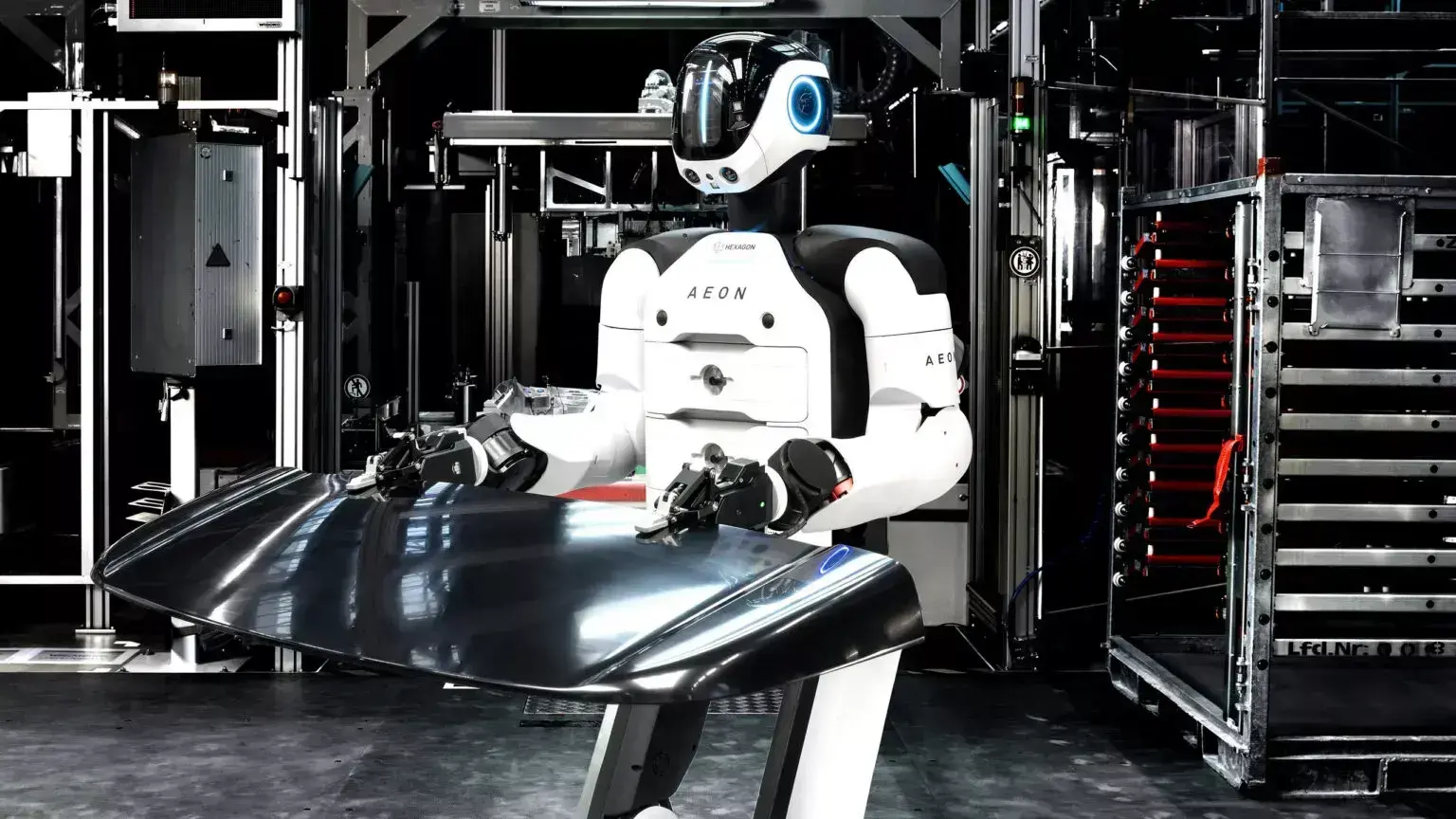
The new employees, whom the company calls “Physical AI,” will assemble components and high-voltage batteries. This became possible thanks to cooperation with Hexagon, which introduced the Aeon robot in June last year. Preliminary tests in Leipzig took place in December 2025, and a full pilot stage will start in the summer of 2026.
This isn’t BMW’s first experience with humanoid robots. Previously, the Figure 02 robot was successfully working at the plant in Spartanburg (South Carolina) for ten months. He worked 10-hour shifts, five days a week, helping in the production of more than 30 thousand X3 crossovers. During this time, the robot performed over 90 thousand operations to accurately position and position sheet parts for welding – a task that requires high speed and accuracy.
BMW emphasizes that the goal of introducing such technologies is not to replace people, but to free them from monotonous, physically demanding and potentially dangerous tasks in order to improve working conditions. However, the company recognizes that the use of robots also increases the competitiveness of production.
BMW is not alone in its quest to automate factories. Similar tests are being carried out by Mercedes-Benz (with the Apollo robot in Berlin), Hyundai (planning to expand use by 2028 in the United States) and Tesla, which is actively developing its Optimus robot.
Earlier it was reported that Daimler will present an electric bus, which has a power reserve 2.5 times greater than that of KamAZ.