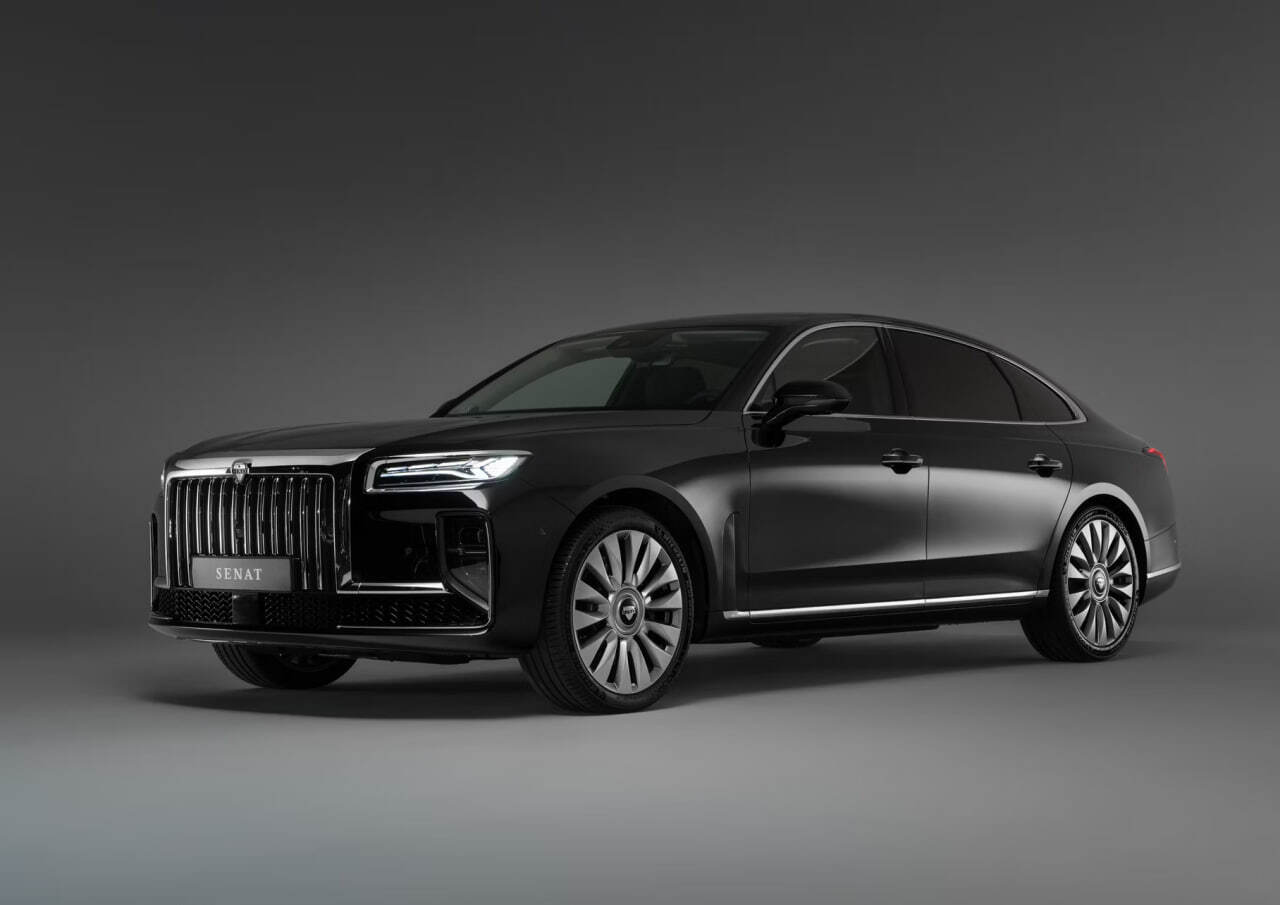
After the release of all three models, Senat’s annual sales volume could range from 1.5 to 2.5 thousand cars. Under an optimistic scenario – with the support of state-owned companies, stable supplies, a competitive crossover price and meeting the expectations of discerning buyers – the figure could reach 3-4 thousand cars. Kvazar Marketing Director Irina Gerasimova told the Autostat agency about this.
“After expanding the line, demand will most likely be distributed as follows: the share of Senat 900 in brand sales will be about 30 – 35%, Senat 1000 will account for 10 – 15%, the crossover will take 50 – 60%. The extended Senat 1000 will be an even more niche product for top officials and protocol tasks. The main volume should come from crossovers, because the Russian market has long been shifted towards SUVs, and it is easier for corporate clients to justify a large premium crossover as a universal car for executives, security guards and regional trips,” comments Irina Gerasimova.
Yuri Chistov, CEO of the Fresh marketplace, predicts that the crossover will take up to 60% of the brand’s sales. According to him, demand for SUVs is being cultivated in Russia: such cars are bought not only by government agencies, but also by private VIP clients as family cars. The crossover is distinguished by greater versatility and cross-country ability.
Yuri Chistov admitted that the share of the basic Senat 900 sedan in the brand’s sales could be 30%, and the one-piece extended versions could be about 10%. According to him, given a favorable economic situation, the plant in Shushary could reach a production volume of 5-6 thousand cars per year, but for now this is only a theoretical scenario.
Read also:
Fiat released a car for a million rubles, but there is almost nowhere to drive it
Sales of domestically assembled Gelendvagens have opened in Russia for 1.3 million rubles
Little Defender: tuners have turned the Suzuki XBee into a stylish SUV