Since the beginning of the year, the rise in car prices has already amounted to 7% and will continue in the future, surveyed dealers and experts told Motor magazine. In the case of alternative imports, fluctuations in exchange rates were reflected in the price of ordered vehicles, and after changes in the rules for calculating salvage duty, pass-through vehicles became more expensive abroad.
Very soon, cars will rise in price even more than at the beginning of the year, Marketing Director of the Avilon automobile group Yuri Blinov told Motor magazine.
“The price increase since the beginning of 2026 has averaged 3−7%. But this is the average temperature in the hospital. For individual brands and models, the spread is noticeably higher. For Chinese brands, growth is closer to the upper limit; for localized models and warehouse balances, there are no significant changes; for individual items, there are spot adjustments depending on demand. According to our forecast, in the next 3-6 months the price increase for new passenger models could range from 5% to 10%,” Blinov shared his expectations.
Haval H9
Haval
According to him, the market now lives not by the prices included in the price lists, but by the real terms of transactions, taking into account discounts for car loans, trade-ins and subsidies. The cost of a car today is influenced by many things: the dynamics of exchange rates, the growth of recycling fees, logistics costs, as well as the high cost of financing, despite the gradual decrease in the key rate, Blinov added.
Reserves are low
The former head of the Russian Automobile Dealers Association (ROAD), Oleg Moseev, stated that the inventories of unsold cars among automakers and dealers exceed the optimal volumes, but not so much as to put pressure on the business with increased costs.
“In general, dealers and automakers now have a four-month supply of unsold cars: this is slightly more than the normal stock – three months of sales. With the revival of the market, we may encounter a shortage in some segments and models, and then prices may rise,” Moseev said in an interview with Motor magazine.
At the beginning of the year, automakers and dealers raised prices by the amount of the increased VAT, but their further increase threatens to slow down sales, and auto companies will try to avoid it, he hopes.
“You need to buy a car when you need it and look for the best offer at that particular moment. There is no point in playing with buying a car, like on the stock exchange: you will most likely lose,” Moseev concluded.
Gray import
As for parallel imports, the market there reacts much faster to exchange rate fluctuations, points out the former head of ROAD. But this affected those payments that are being made right now. For those cars that have already been imported, sellers do not have the opportunity to significantly increase prices,” Moseev said.
The cost of cars ordered abroad has already increased by 10% due to the depreciation of the ruble, notes Frank Auto.
“The cars that we buy in China and Europe have already risen in price by about 10% – this applies to both new cars and used cars,” Kommersant quotes Frank Auto CEO Irina Frank as saying.
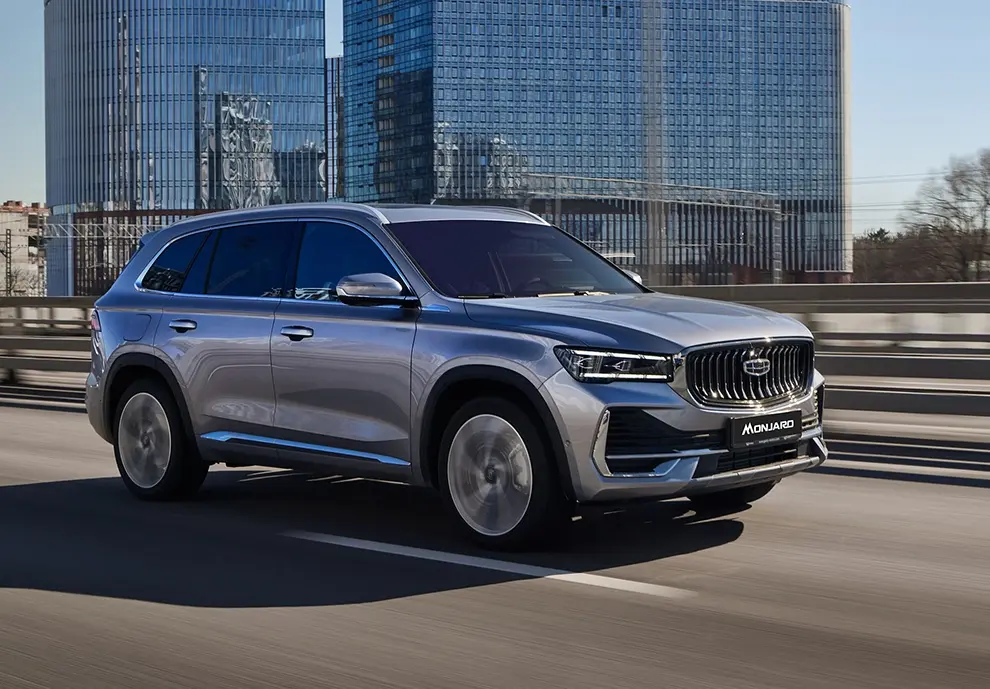 Geely Monjaro
Geely
The founder of the RogovMobil company (supplies cars from South Korea and China), Dmitry Rogov, admits that the market for alternative car imports has already responded to the depreciation of the ruble, but hopes that the rise in price will not force customers to abandon their intention to purchase a car from abroad.
“Even if we talk about an expensive car, which will cost a Russian about 4 million rubles, but is purchased in China for 150 thousand yuan, it will add 150 thousand rubles in price if the yuan rises in price by a ruble. This, of course, is unpleasant, but clearly not a reason to abandon the conventional Volkswagen Tayron,” Rogov noted in a conversation with Motor.
Delivery from Korea
According to Rogov, after the abolition of the preferential recycling fee for cars more powerful than 160 hp, the import of cars from South Korea decreased by 3-4 times. At the same time, in China there is a range of cars of European brands, the power of which falls within 160 hp. (primarily BMW and Volkswagen) and their import into Russia increased.
“People aiming to buy a car from Korea and Germany are not very willing to agree to import a car from China. Those who have the opportunity expand the budget. If there is a need to buy a car, it is better to do so. Cars in Russia almost never become cheaper, except in clearly extreme moments, like in April-May 2022,” Rogov said.
If we talk about alternative imports, the opportunity for more profitable customs clearance of cars through Kyrgyzstan is expected to close in the near future. Demand is directed towards a limited number of cars with engines up to 160 hp, and prices for them are rising, Rogov warned.