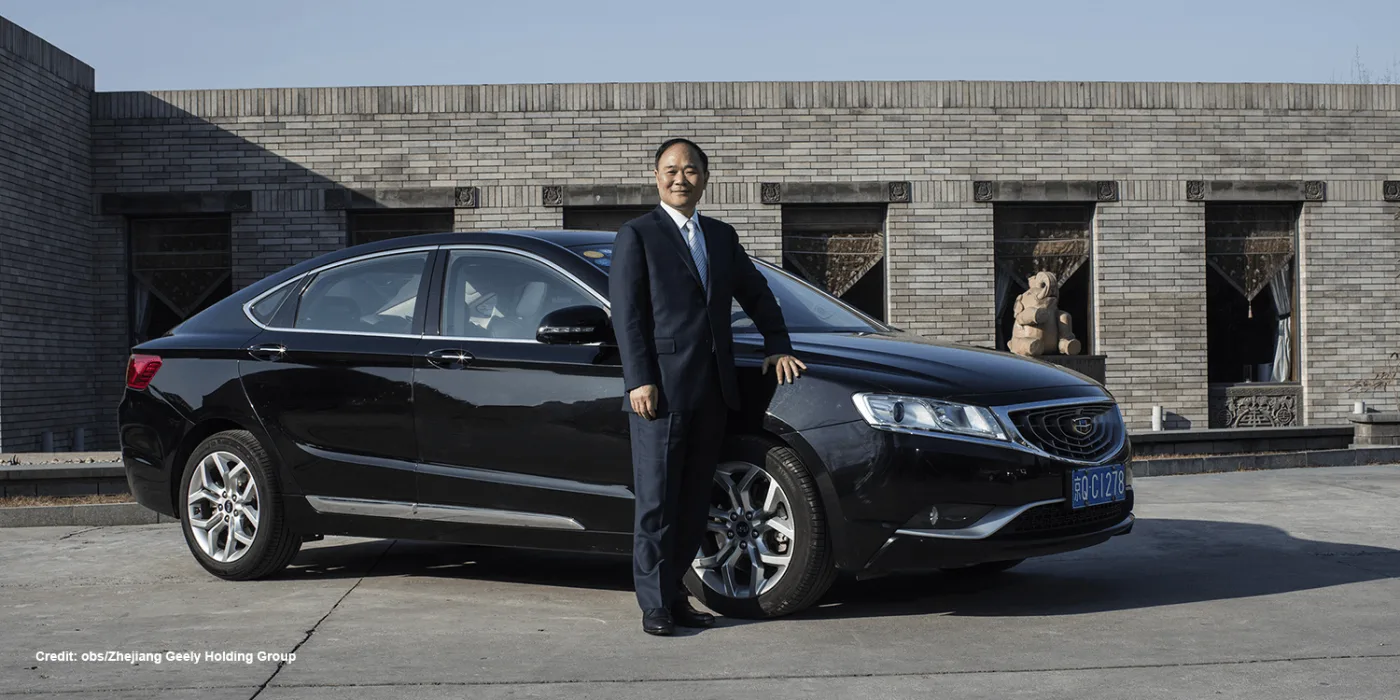
The Geely concern today has the status of one of the largest automakers in the world. To make the scale of this greatness clear, here’s a fresh fact: Renault has unveiled a new crossover, called Filante, and it is based on the Geely CMA platform. Now it’s hard to imagine that the Chinese auto giant – the same one that owns Volvo, Polestar, Lotus, Zeekr, Lynk&Co, a piece of Daimler and much more – could build a parody of the Mercedes E-Class W210. But the first private car company from the Middle Kingdom began its journey precisely with this awkward car. Which, fortunately or unfortunately, time has not been kind to.
Geely
Li Shufu is somewhat similar to comrade Leonid Ilyich Brezhnev, because he lived his entire adult life in a communist country, but quite early on he became interested in cars – mainly foreign ones. Since in Shufu’s youth the main symbol of success was Mercedes-Benz cars, it is not surprising that the future billionaire had a special interest in cars with a three-pointed star on the hood.
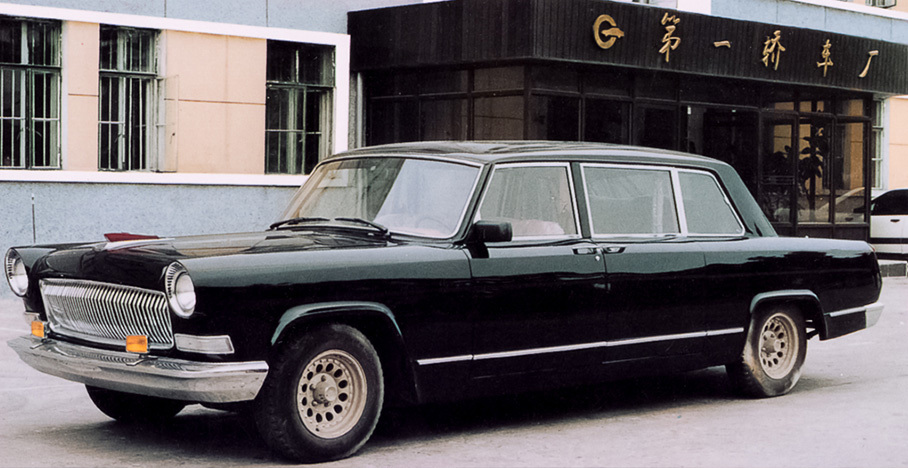 Hongqi Limousine for Chinese nomenclature
Hongqi
They were beautiful, stately and stood out favorably against the background of most of the cars that traveled the roads of the People’s Republic of China. Nothing like this was produced in China at that time – except for the government Hongqi limousines, which may remind Russians of elongated 21st Volgas. And Li Shufu decided to correct this shortcoming by planning to launch the production of cars that would be as good as Mercedes. Fortunately, by the early 1990s, Li Shufu already had the money to afford such an adventure.
After graduating from university in 1982, Shufu purchased a camera and began working as a tourist photographer. Things were going so well that within a few months the future head of Geely opened his own photo salon, which not only quickly returned the money invested, but also began to generate significant profits. Therefore, by the mid-1980s, Shufu became a millionaire. In 1984, a Chinese entrepreneur opened his first big business – a company for the production of refrigerators and equipment for refrigeration units, which received the unpronounceable name Zhejiang Huangvan Shiqu Refrigerator Company. And then Shufu faced his first failure.
 CarNewsChina
It was not the buyers who planted the blame – Arctic refrigerators sold quite well. It’s just that the government in 1989 introduced new licensing conditions for manufacturers of freezing equipment – in fact, the new decree made it impossible for private companies to produce refrigerators. Shufu, not wanting to put up with this state of affairs, opened a new business and began manufacturing construction and finishing products from aluminum, magnesium and other metals.
 CarNewsChina
But the desire to create a Chinese luxury car that could compete with Mercedes-Benz did not fade away. Therefore, in the early nineties, Shufu tried to organize an automobile enterprise… and again stumbled over the rake of Chinese licensing. The government was not ready to grant an automaker’s license to a company that only owned refrigerators and aluminum profiles. Therefore, in 1992, Shufu began producing motor scooters under the Geely brand (translated from Mandarin as “lucky”). Fortunately, Honda was a partner in this difficult task.
 CarNewsChina
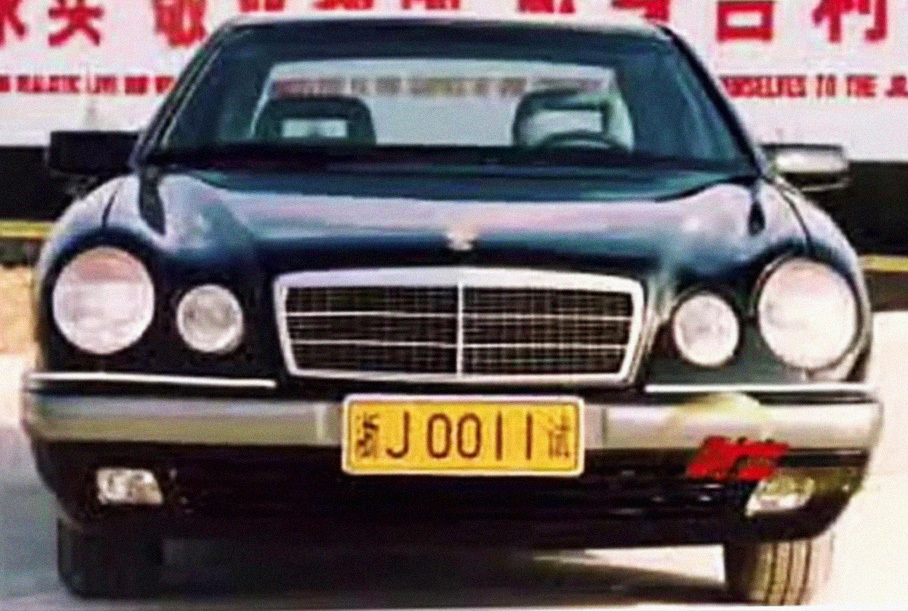
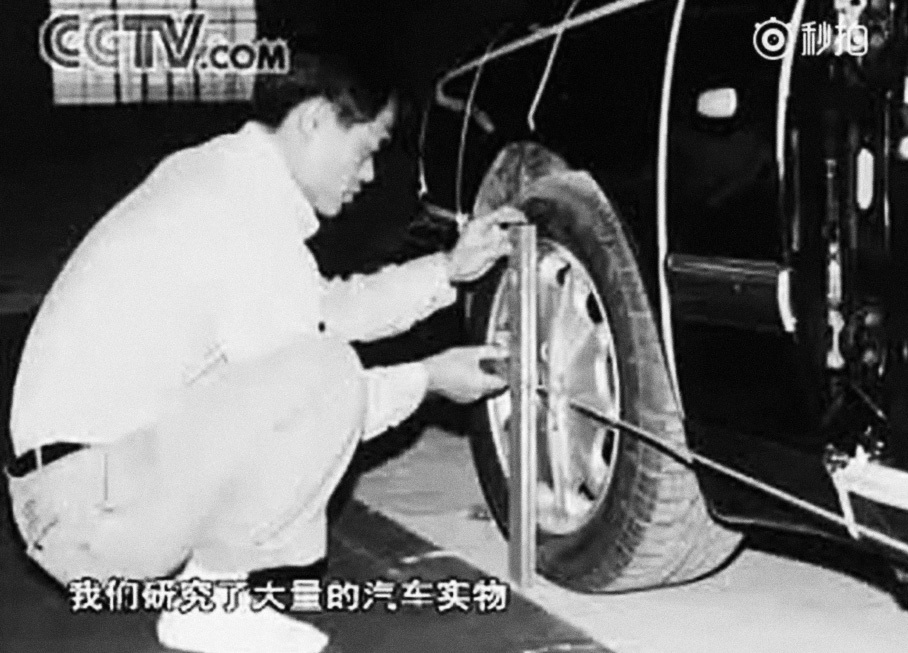
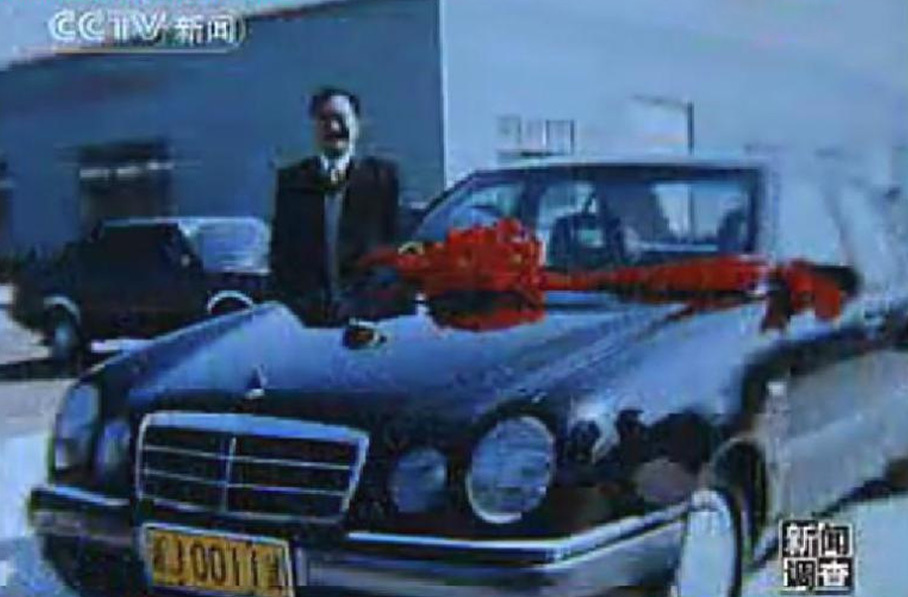
Work on the first Geely car was carried out behind the closed doors of the engine plant and was completed in 1996. It is not known exactly when they started, but, presumably, it took Lee and the guys several months, or even weeks, to do everything. As a source of inspiration for the new product, it was decided to use the new Mercedes-Benz E-Class, which premiered in 1995.
 CarNewsChina
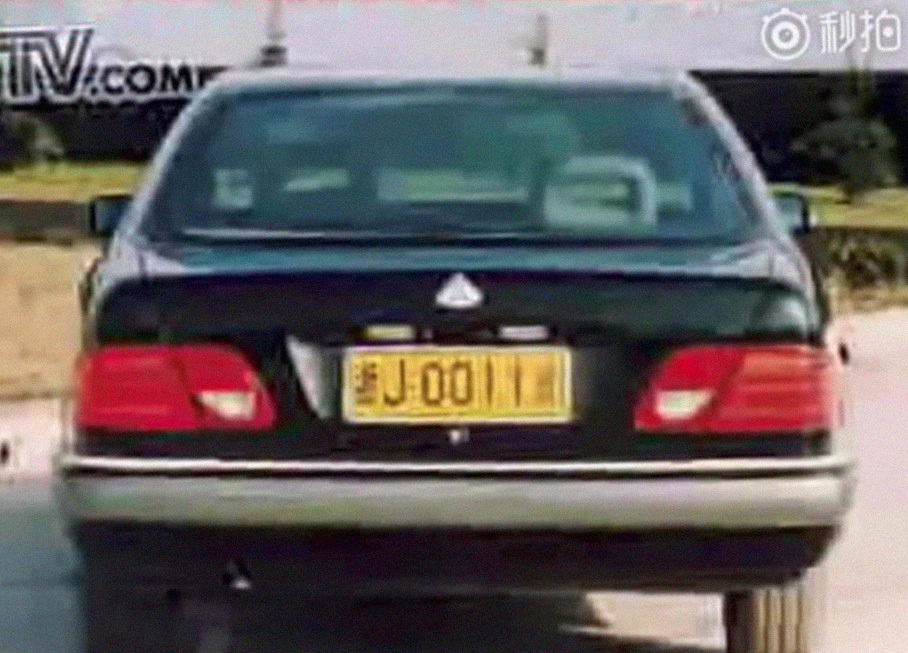
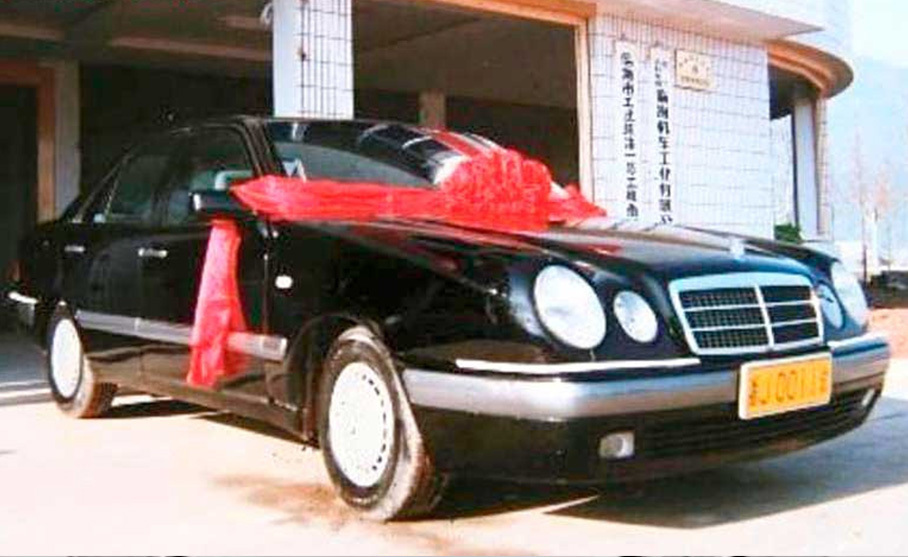
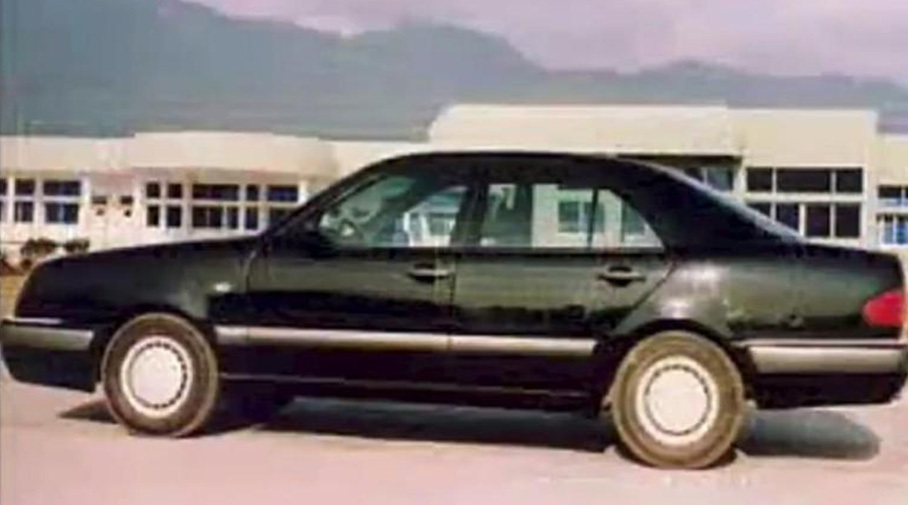
What did Shufu and his subordinates do? What most Chinese automakers did ten years ago was to take a popular car in China as a basis, cut off all the excess from it and put a body reminiscent of a modern, European one over its guts. The result, as you can see for yourself, turned out to be quite unusual: the wheelbase of the sedan was disproportionately short, and the front overhang, on the contrary, was excessively long. Also, small wheels that are buried in the arches do not add aesthetic advantages.
 CarNewsChina
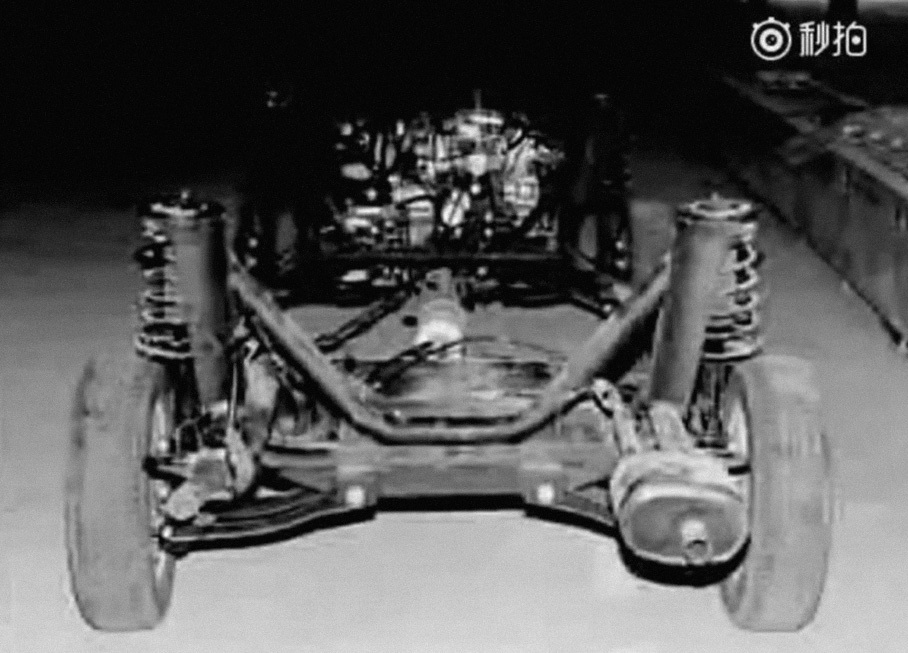
This is because the chassis for Number 01 was borrowed from the Hongqi CA7220 sedan, which is better known in the world as the Audi 100 (C3). In China, the “cigar” was produced until the early 2000s, and after the “Red Flag” (that’s how Hongqi is translated), First Automotive Works (FAW) took over the baton.
 CarNewsChina
From Audi, the Chinese Mercedes inherited the front and rear subframes, interior and, presumably, the engine. The body panels, in turn, were made by Geely from steel and fiberglass. One can only guess what would happen to the passengers and driver in the event of an accident – after all, no deformation zones for the car were calculated.
 CarNewsChina
Despite the fact that the car was a pure copy-paste of the E-Class, Li Shufu was proud of his brainchild and used it for some time as personal transport. But this car, of course, never made it to mass production. However, it set the general trend for future Geely cars.
 Geely
Geely
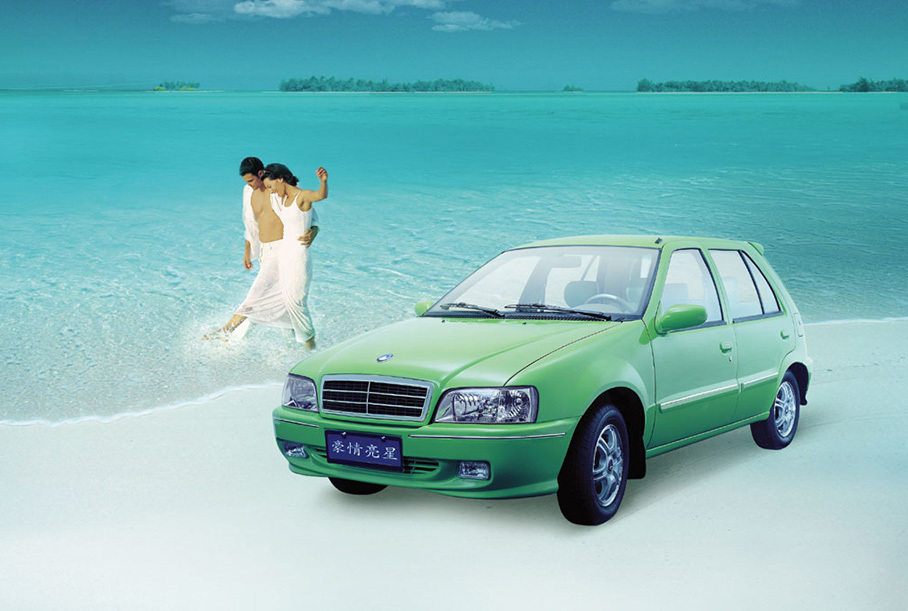
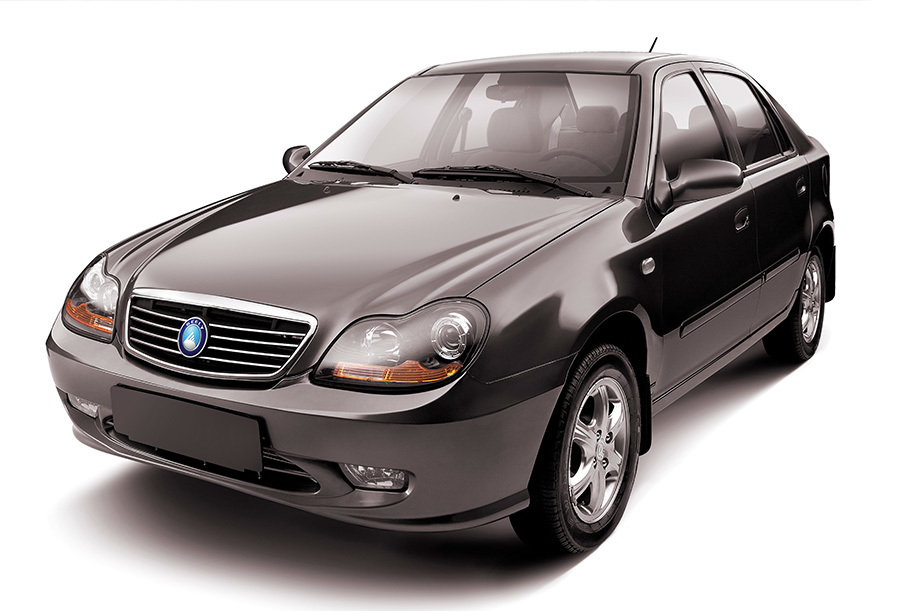
Take a closer look at Geely’s first production car – the Haoqing hatchback, built on the Daihatsu Charade. After all, its front end is trying its best to look like the C-Class W202! What about the Geely CK, which can be found even in Russia? For his desire to be like the S-Class of the W220 generation, only the lazy did not ridicule him.
 Geely
Geely
As for Number 01, it was last seen in 2009, and then the car was in terrible condition: corrosion everywhere, no grilles or doors… Little is known about its further fate: some say that it was put under pressure, others say that it is still in Geely’s storerooms, to one day become a museum exhibit. Be that as it may, Geely’s automotive history began with this strange car./m