Many drivers, with a limited budget, are thinking about buying tires on the secondary market ahead of the season. The head of the group for technical customer support, testing and certification at Ikon Tires, Alexander Parkhomchuk, told Motor magazine about the possible troubles of such a purchase.
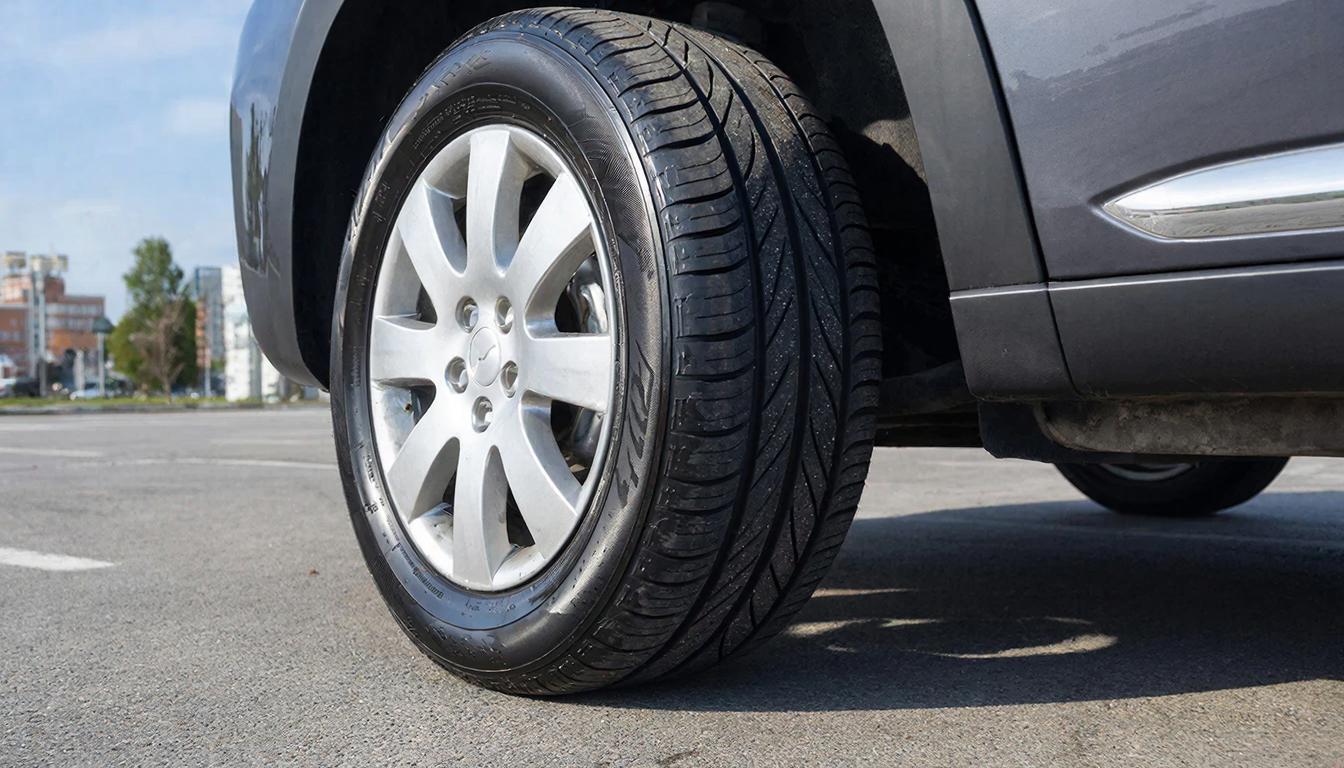
“When you buy a set of tires secondhand, you will never know how they were used and, most importantly, how they spent the last few years. Ultraviolet radiation has a detrimental effect on the top layer of the rubber compound of tires, temperature changes lead to the formation of condensation, and improper storage in a “stack” without disks can lead to deformation of the frame,” the expert said.
These are just some of the problems you may encounter when purchasing tires that have been stored incorrectly. Outwardly, a tire may look quite decent, but have dangerous damage, Parkhomchuk pointed out.
Another argument used by used tire sellers is “the tread is almost new.” Even with good residual depth, the tire may not be suitable for safe use. Wear may be uneven.
If the tires were used on a car with incorrect wheel alignment angles, the tread may be worn unevenly, and in the event of a suspension malfunction, “spots” or “laddering.” On such tires the car will have poor road holding, especially on wet surfaces.
In addition, some sellers carry out pre-sale preparation: they “blacken” the rubber, which can also affect the properties of the rubber mixture, since the composition of such paints can be aggressive. Sellers also install patches and perform an extremely dangerous procedure – re-cutting the tread.
At the same time, the remnants of the tread and sub-groove layer are removed, which makes the tire thin and vulnerable to any mechanical damage, resulting in the illusion of a residual depth suitable for use, Parkhomchuk said.
Also, undercutting can lead to damage to the tire structure, which will manifest itself as a bulge in the tread or tread separation. This method is a gross violation of all safety rules.
The Technical Regulations of the Customs Union “On the Safety of Wheeled Vehicles” (TR CU 018/2011) and the Rules for the Operation of Ikon Tires automobile tires prohibit the restoration and deepening of the tread of tires for passenger cars, the expert noted.
He explained that purchasing tires secondhand completely deprives the buyer of warranty rights, since there are no receipts or obligations of the seller. If a tire breaks on the highway or delaminates, all associated expenses – a tow truck, wheel repair and the purchase of a new set – fall solely on the car owner.
Read also:
— AvtoVAZ will release a powerful version of the Lada Azimut crossover
— Moskvich spoke about plans to modernize the 3e electric car
— Russians were told about the disadvantages of buying a new car on the marketplace