Benedetto Vigna said that touch controls in cars instead of physical buttons and switches are being introduced both to attract a younger audience and to save money. The head of the company explained that manufacturing the buttons requires production equipment, which is not needed if the buttons are virtual.
“Touch buttons are created for the benefit of the supplier. Creating a touch button is cheaper, 50% cheaper,” said the head of Ferrari in an interview with Autocar India.
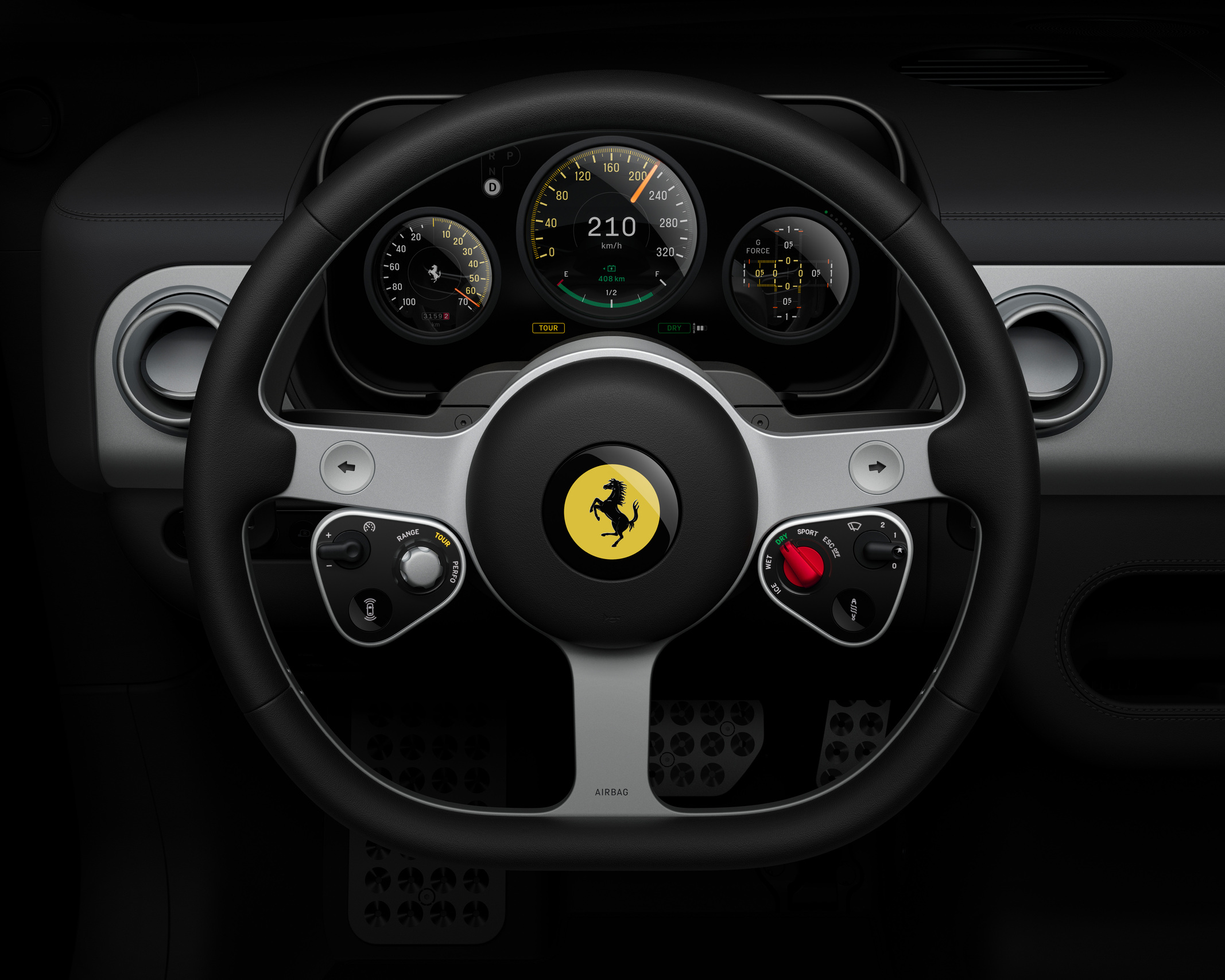
To develop the interface for the first all-electric Ferrari Luce, the Italian supercar manufacturer invited designer Jony Ive, the most famous expert in display design, who worked on Apple products that revolutionized the world of mobile devices.
Hiring such a specialist, however, turned out to be cheaper than developing physical buttons and switches. At the same time, Benedetto Vigna admitted that a uniform interface is well suited for consumer electronics, but does not resonate with Ferrari customers.
“We need to do something unique,” Vigna said.
Going forward, Ferrari is aiming for what it calls good “phygital design”—physical controls with digital additions. There will be no transition to a fully digital interface in the Ferrari cabin.
Earlier, the first Jeland body was welded at the former Russian GM plant.