On March 18, 1858, Rudolf Diesel was born, whose name is given to compression ignition engines. The engineer lived a colorful life and mysteriously went missing. Diesel did not live in those days when his invention began to be widely used on ships, locomotives, trucks and cars, and his surname became a household name. Motor magazine recalls the main milestones in Diesel’s biography and the fate of his engine in the automotive world.
Parisian childhood and German education
Rudolf Diesel was born in Paris into a family of German immigrants. His father was a bookbinder and tanner. In 1870, amid the Franco-Prussian War, they were forced to leave France and move to London. Soon, his parents sent 12-year-old Rudolph to Augsburg to live with relatives so that he could receive a real German education and master the language perfectly.
He was undoubtedly talented and a brilliant student – first at school in Augsburg, and then at the Munich Polytechnic University. In 1880, Diesel graduated with the best result in the entire history of the educational institution.
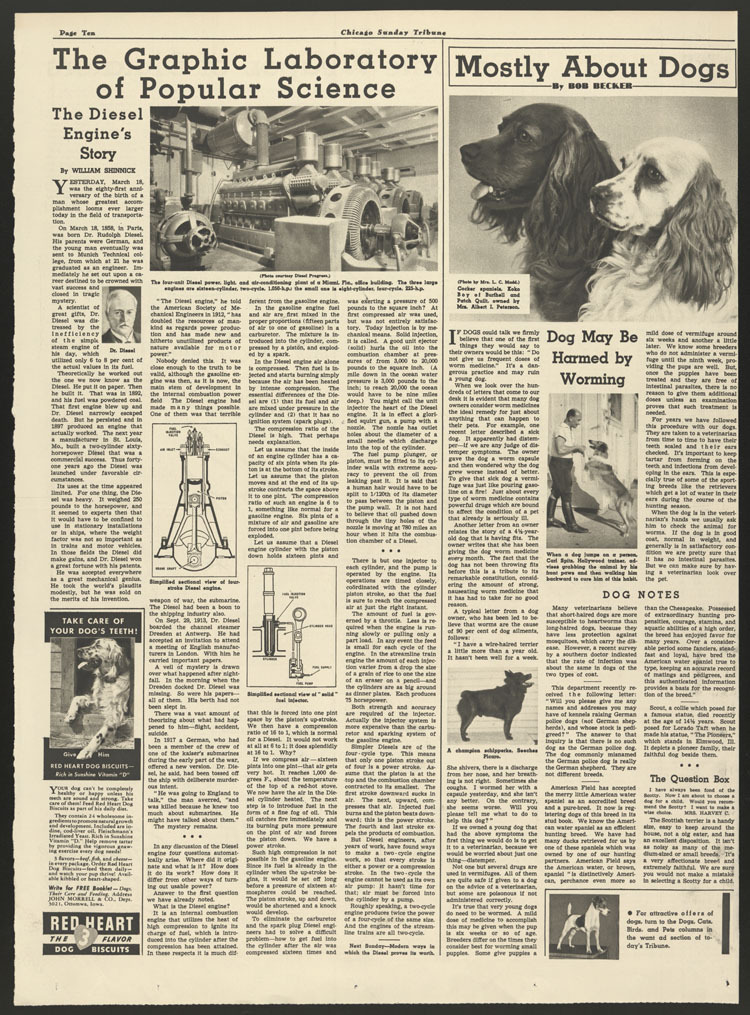
Publication in The Chicago Tribune telling about the revolutionary engine of Rudolf Diesel
Michigan State University Library
Revolutionary idea
The German inventor received a patent for the “principle of operation and design of an internal combustion power engine” at the Imperial Patent Office in Berlin on February 23, 1893. The application for this invention was filed a year earlier – on February 28, 1892.
Rudolf Diesel’s idea was revolutionary: instead of igniting the air-fuel mixture in the cylinder, as in gasoline engines, he proposed first strongly compressing clean air and then injecting fuel into it. When compressed in a Diesel engine, the air heated up to 600-650 °C, and this was enough for self-ignition.
Only physics and no unnecessary details: a Diesel engine does not need either a carburetor or an ignition system, but itself must be stronger than a gasoline engine due to the higher pressure in the cylinders.
The dream of building an engine with maximum efficiency arose in Diesel while studying in Munich under the influence of lectures by Professor Karl von Linde. In his patent application, Diesel proposed using coal dust as fuel, but quickly realized that it was easier to work with liquid fuel. As a result, the first samples ran on kerosene.
Work on the creation of a functional motor of a new design began in the same 1893 at the engineering plant in Augsburg (current MAN) with the support of industrialists Friedrich Krupp and the Sulzer brothers.
Successful development
The first operational diesel engine, built in Augsburg, was successfully launched in 1897. It developed 20 horsepower at 172 rpm. Its efficiency was 26.2% – against 12% for steam engines and 20% for gasoline engines operating on the Otto cycle.
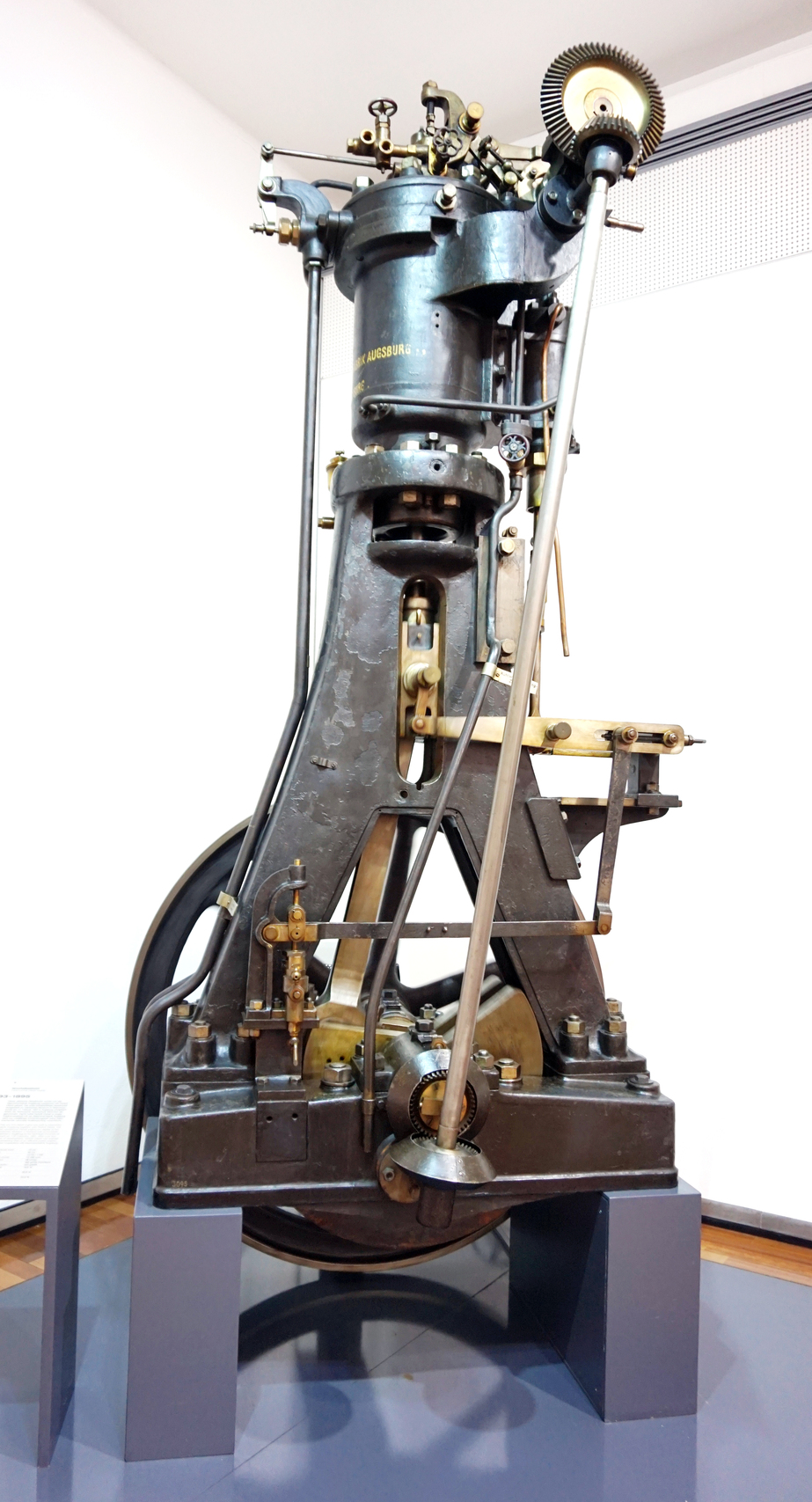 Prototype of the first diesel engine
commons.wikimedia.org
The stationary Motor 250/400 unit weighed 5 tons; the numbers in the index indicated the cylinder diameter and piston stroke. The working volume was 20 liters, and the creation of compact diesel engines suitable for installation in cars was still a long way off. But Diesel’s invention had a long way to go before it changed the world forever. And the tests of the first prototype in 1893 ended in an explosion: the pressure gauge failed because the pressure in the cylinder reached 80 atmospheres, significantly exceeding the calculated values.
Rudolf Diesel did not think that his engine would be tied to oil forever. At the World Exhibition in Paris in 1900, he demonstrated a motor powered by peanut oil. The inventor was convinced that vegetable fuels were the future and predicted that one day they would become as important as oil.
Taken root in Russia
The first buyers of Diesel engines were industrialists and shipowners. A year after successful tests, Emmanuel Nobel (Alfred Nobel’s nephew) bought a production license, and diesel engines began to be produced in Russia. Since 1899, the Ludwig Nobel mechanical plant in St. Petersburg launched mass production. These engines were switched from kerosene to crude oil – this modification became known as “Russian diesel”.
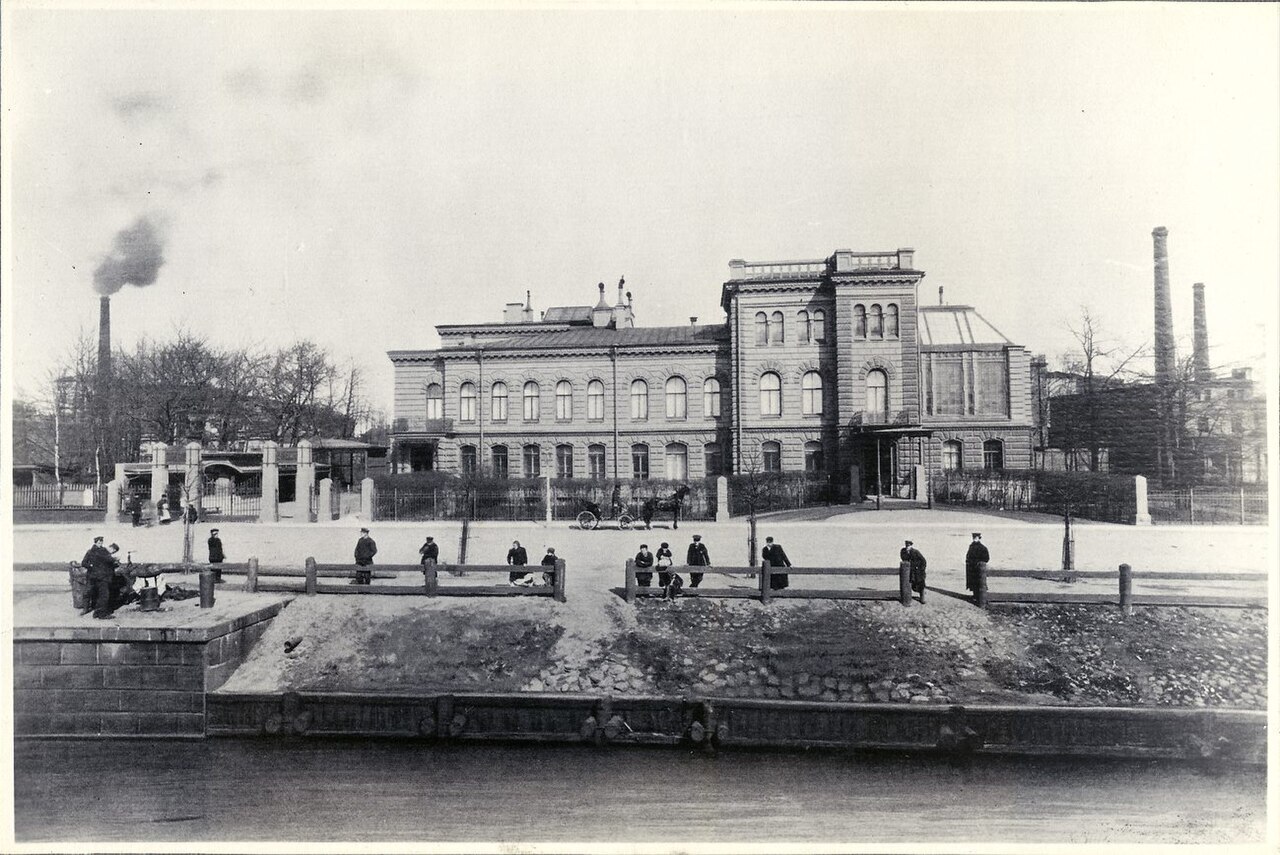 Ludwig Nobel plant in St. Petersburg
commons.wikimedia.org
The world’s first river vessel with a diesel engine was launched in 1903, in 1908 engines of this type began to be introduced on submarines, and by 1913 there were 80 motor ships in the world, and 70 of them belonged to Russian owners.
The creation of a commercially successful engine made Rudolf Diesel rich and famous, but the inventor turned out to be a bad businessman. His investments did not pay off. In addition, the engineer’s well-being was undermined by patent litigation and the need to pay compensation to three German engineers who accused Diesel of plagiarism. The financial crisis of 1913 also played a negative role.
A long way to the auto industry
Despite the fact that Rudolf Diesel himself experimented with the development of a compact engine suitable for installation on a truck, in the first decades these engines were used mainly as stationary installations, as well as on ships and locomotives. They were too heavy and slow for cars. This began to change in the 1920s when Bosch engineers created a compact high-pressure fuel pump.
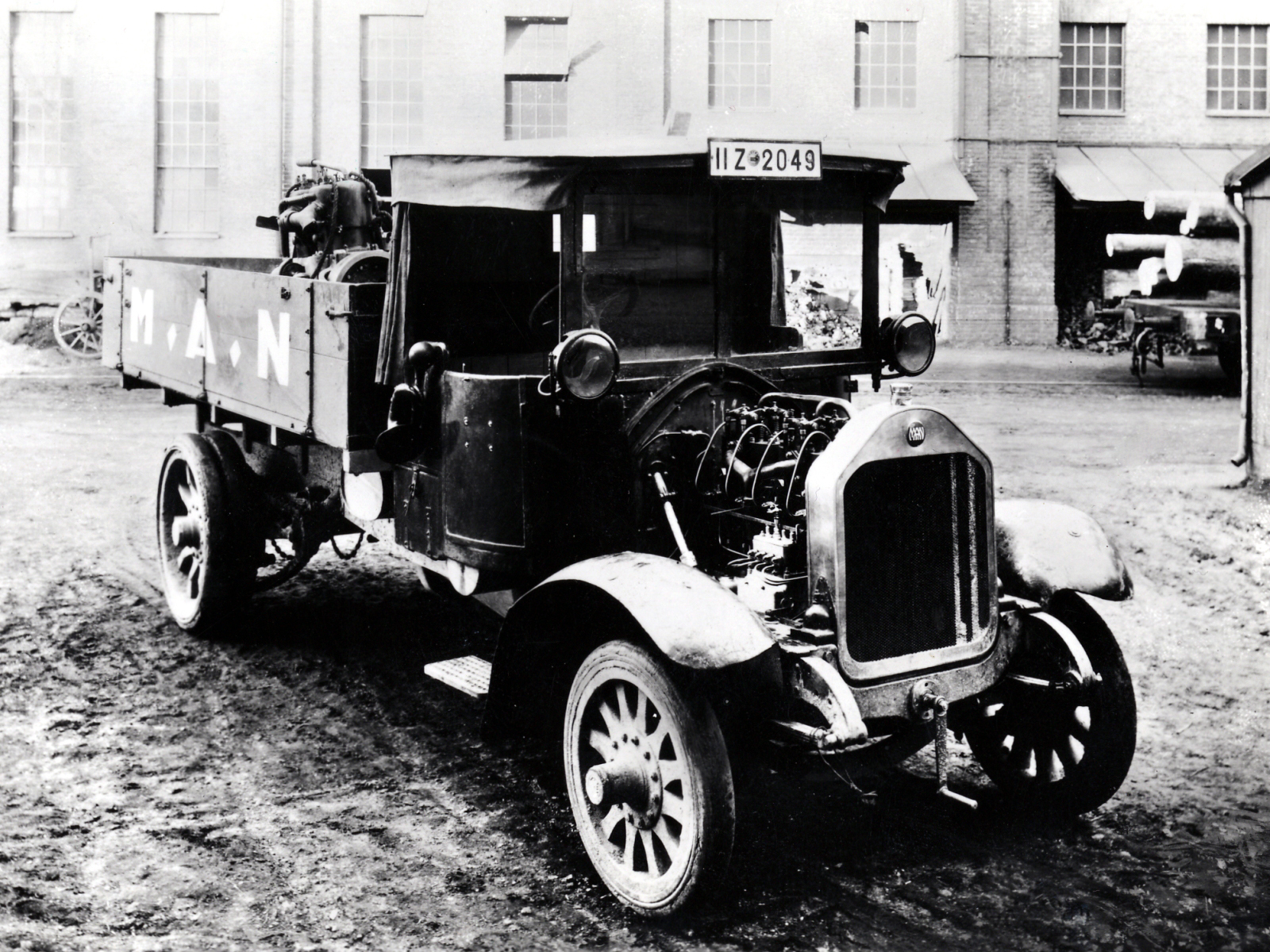 Diesel MAN-Saurer
MAN
At the Berlin Motor Show in 1924, the first diesel truck with direct fuel injection was presented to the public – it was the MAN-Saurer with a four-cylinder engine producing 40 hp. Almost simultaneously, Benz presented a similar development. The efficiency was stunning: the diesel truck consumed 86% less fuel than its gasoline counterpart.
Legendary models and records
The turn came to passenger cars only in the 1930s. Even under Andre Citroen in 1933, a diesel engine was experimentally tried on the Citroen Rosalie passenger car, but this version did not go into production. The first production passenger car with a diesel engine under the hood was the Mercedes-Benz 260 D, which rolled off the assembly line on February 15, 1936. The 2.5-liter four-cylinder engine developed a modest 45 hp, but its main trump card was efficiency. True, contemporaries considered these machines noisy and slow.
The second birth of the passenger diesel engine occurred in the 1970s. The real excitement was caused by the 1975 Volkswagen Golf Diesel – the first compact and high-revving car to run on heavy fuel.
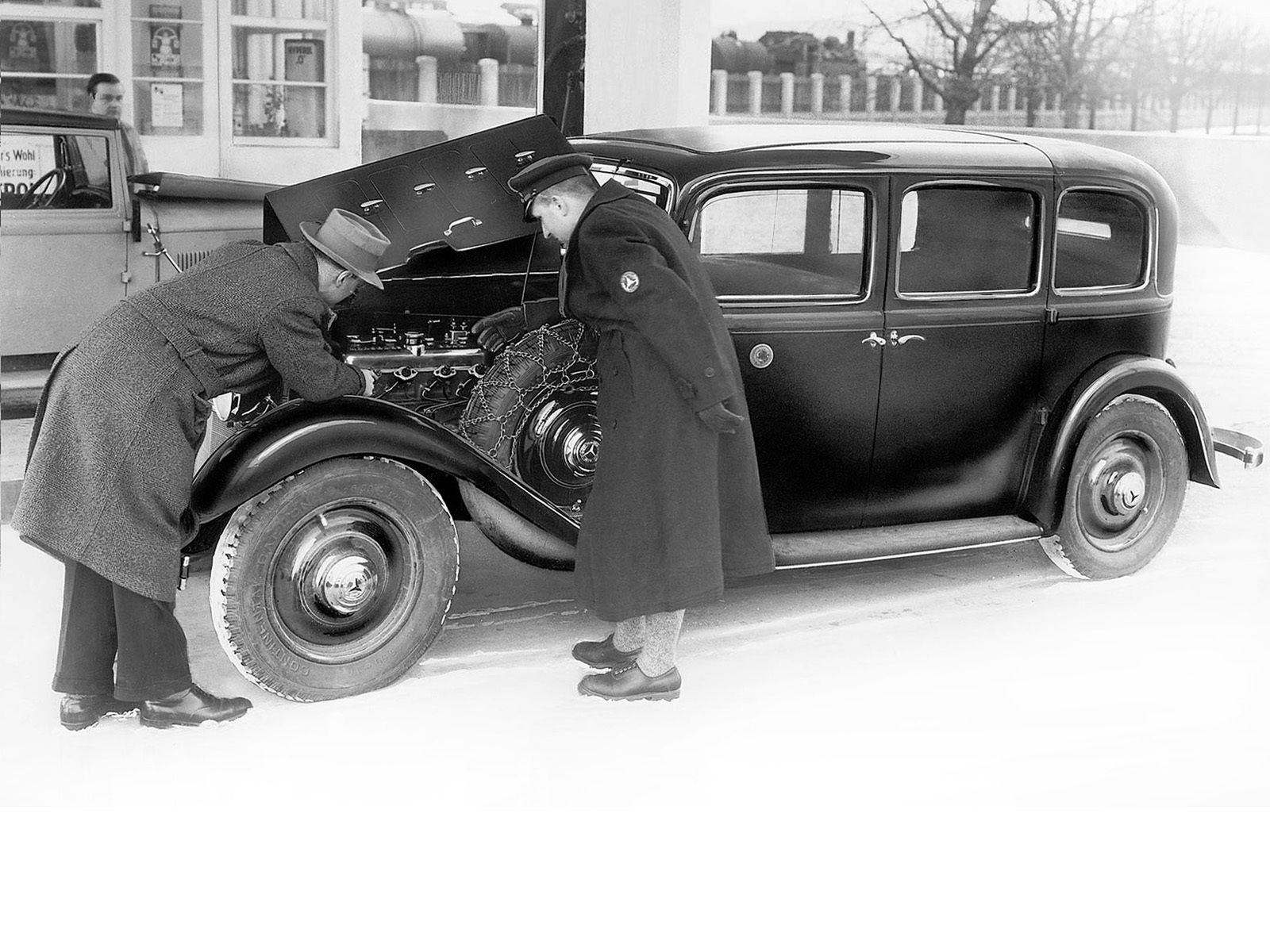 The first production passenger car with a diesel engine – Mercedes-Benz 260 D
Mercedes-Benz 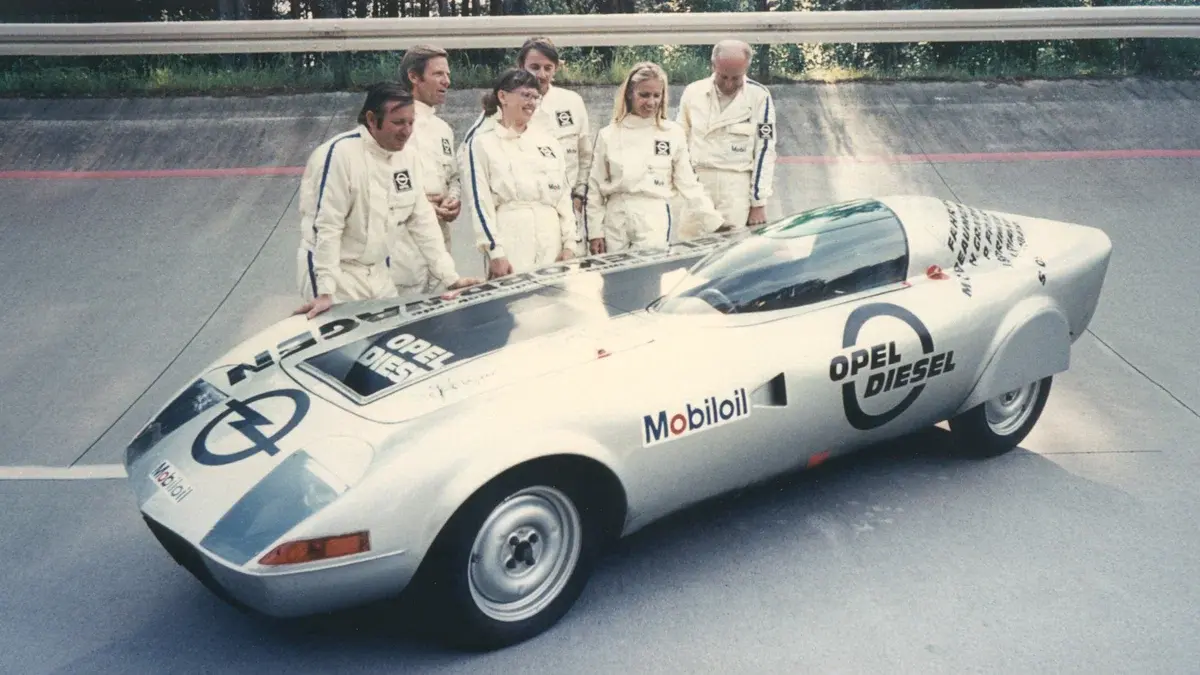 Opel GT Diesel
Opel  2008 Audi R8 V12 TDI
Audi
The new era for the diesel engine was also marked by new records: in 1972, the Opel GT prototype with a diesel engine, built in a single copy, set more than 20 international speed records, and 6 years later, a specially prepared diesel Mercedes-Benz accelerated to 338 km/h.
But the real revolution in diesel production was made by the Common Rail injection system, which appeared in the 1990s. Electronics and piezo injectors have turned diesel into a quiet, powerful and environmentally friendly engine, worthy even of executive sedans. By 2006, more than half of new cars in Europe were sold with diesel engines. They even tried to install such engines in sports cars: in particular, the 2008 Audi R8 V12 TDI concept with a 500-horsepower turbodiesel producing 1000 Nm of torque accelerated to “hundreds” in 4.2 seconds, but never became production.
The mysterious disappearance of an inventor
Rudolf Diesel himself went missing on September 29, 1913, when he was heading from Antwerp to London on the steamship Dresden. The night before his disappearance, he had dinner with two engineers. The inventor was in a great mood, talking about engine modifications and prospects for cooperation with the British. At about 22:00 he went to the cabin, stopped the steward on the way and asked to wake him up at exactly 06:15. No one saw him alive again.
In the morning, the cabin was empty, the bed was not rumpled, although the pajamas were neatly laid out and the watch was left in a visible place. Diesel’s coat and hat were later found folded under a railing on the deck. Ten days later, the crew of the Dutch vessel Coertsen discovered the body of a man in a state of severe decomposition at sea. The sailors did not lift him on board, but only removed personal belongings from the deceased: a wallet, a pill case, glasses and a knife. On October 13, Diesel’s son identified his father from them.
There are many versions regarding Diesel’s disappearance: from self-departure (he was practically bankrupt and left his wife a bag with money and promissory notes) to an attack – either by German intelligence services who did not want the patents to go to the British, or by oil magnates who were not interested in an engine capable of running on vegetable oil. The truth has not yet been established.