The Ministry of Internal Affairs regularly reveals schemes to defraud car buyers. Among them are sellers with debts, scammers with fake documents and outbid sellers with fake goods. Experts told Motor magazine how a conscientious buyer can avoid falling for their tricks.
The owner of a car imported into Russia through parallel import and purchased at a profit may be faced with the need to pay hundreds of thousands and millions of rubles in customs duties and recycling fees if the seller who imported and resold the car cleared it with customs violations, Maxim Shelkov, head of the Autocriminalist expert center, told Motor magazine.
That’s not how they cleared customs
“Recently, due to the large number of cars imported through parallel imports, customs checks of cars released for free circulation quite often. A special unit at customs handles this, and if the car was imported by the first owner for personal use, but resold less than a year later, a commercial salvage fee is charged on it,” Shelkov explained.
The preferential recycling fee for individuals importing a car for personal use is only 3,400 rubles for a new car and 5,200 rubles for a car older than three years.
When reselling such a car within 12 months from the date of registration of the customs receipt order (and not from the moment of registration), the preferential rate is replaced by a commercial one, which can reach several hundred thousand rubles.
According to the Federal Customs Service, additional charges may affect both the seller and the final buyer.
About the scale of the problem
In 2024, based on the results of customs inspections, the amount of additional charges for recycling fees to individuals amounted to 535.9 million rubles. In 2025, customs began to massively cancel electronic vehicle passports (EPTS) for cars imported through parallel imports if inconsistencies were found in the documents. There have been cases when, for temporary import, a person was charged additional payments of tens of millions of rubles, up to an amount of over 20 million.
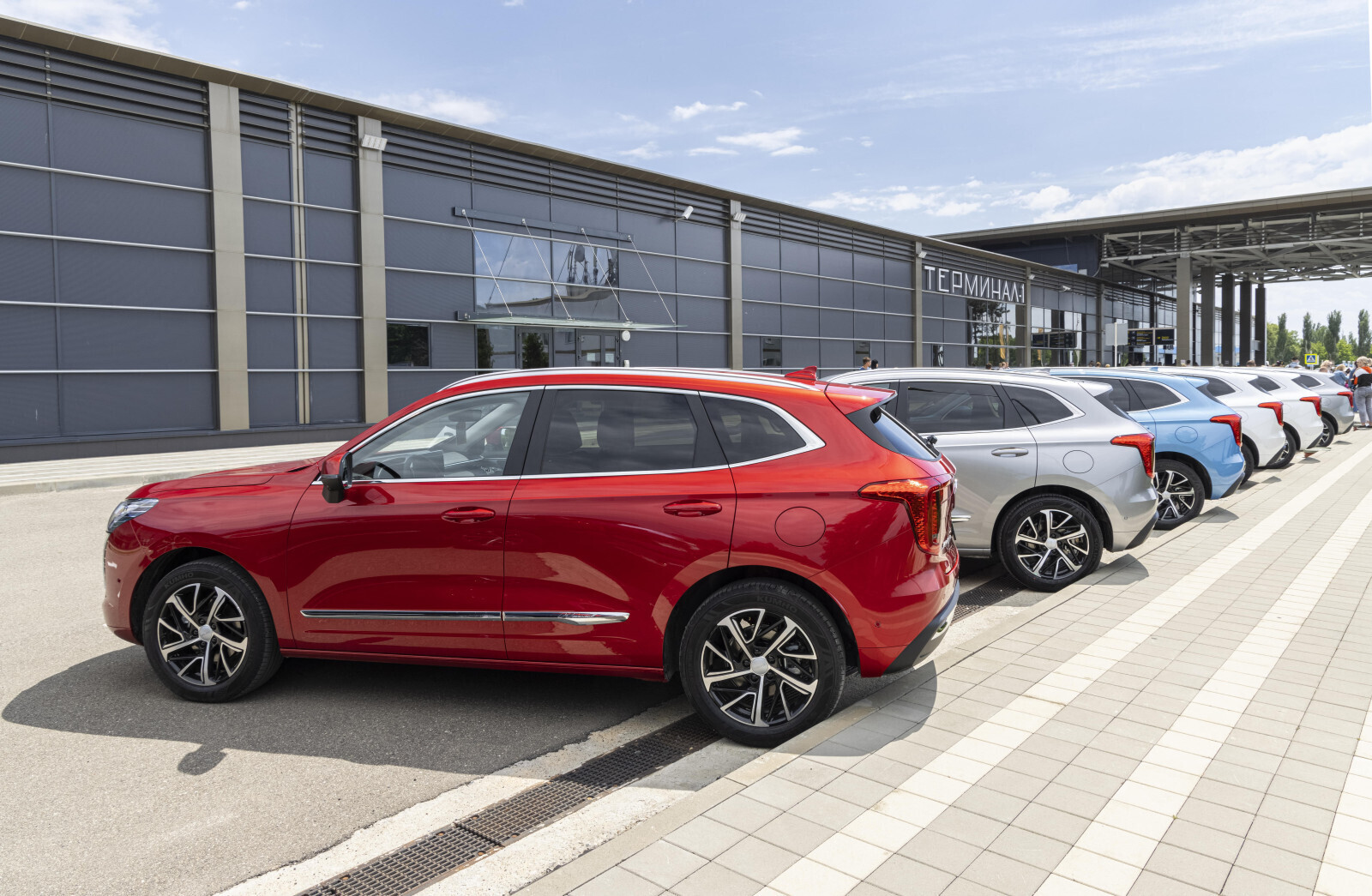
Haval
Haval Jolion
According to him, there are also frequent cases when cars imported into Russia from abroad were registered using forged documents and were cleared through customs not as new (under 3 years old), but as used (from 3 to 5 years old) in order to understate payments. If, after an additional check, customs reveals violations with registration, the car’s electronic vehicle passport (EPTS) will be canceled and the current owner of the car will have to solve the problem of paying arrears.
A scam involving overestimating the age of a car and re-sticking the marking plate on it in order to clear the car as a used car through customs rather than a new one, is mainly practiced on cars imported from China, the auto criminologist specified.
The loan was not given, the car was sold
The situation when a citizen buys a car on credit, cannot pay it off and sells the car pledged to the bank is still common, Shelkov pointed out. In this case, the buyer who gave money to the unscrupulous seller will lose it, and the bank will take the car from him to pay off the outstanding debt.
 Belgee X50
Belgee
“When purchasing a car, it must be checked through the public register of pledges on the website of the Federal Notary Chamber. You can also contact a notary for an extract from this register, stating that the car is not listed in it,” Shelkov advised.
Also, citizens and legal entities often seek to quickly and inexpensively sell a car before entering bankruptcy proceedings so that it is not seized for debts, so the car by VIN number and the seller must be checked through the website of the arbitration court, he added.
Popular groups and deepfakes of auto experts
The Russian Ministry of Internal Affairs regularly uncovers fraudulent schemes in which criminals defraud Russians who want to profitably buy a car out of tens of millions of rubles. So, in March 2026, a resident of Buryatia lost 3.6 million rubles.
 Scammers in chat
Neural networks
He found a car sales group in the messenger, the reliability of which was convinced by a large number of subscribers. As a result, the criminals gradually defrauded him of a large sum of money: 487 thousand rubles allegedly to pay customs duties, 1.2 million for the car itself, 713 thousand rubles for the recycling fee, and about 1.7 million more rubles under false pretexts. As a result, it turned out that the company on behalf of which the scammers acted does not sell cars through instant messengers.
In August 2025, the press service of the Ministry of Internal Affairs reported that fraudsters began to use artificial intelligence to create fake videos on behalf of famous bloggers and auto experts.
Artificial hype and pressure, as well as reduced prices for cars, are used as methods of putting pressure on a gullible buyer.
Fraudulent car dealerships
The scheme with fraudulent car dealerships, in which citizens are offered cars at a reduced price through advertisements, and when visiting the showroom, it turns out that such a car is not available, remains popular in Russia. As a result, gullible citizens are forced to agree to buy a more expensive car and take out the remaining amount on credit at high interest rates.
Fake documents
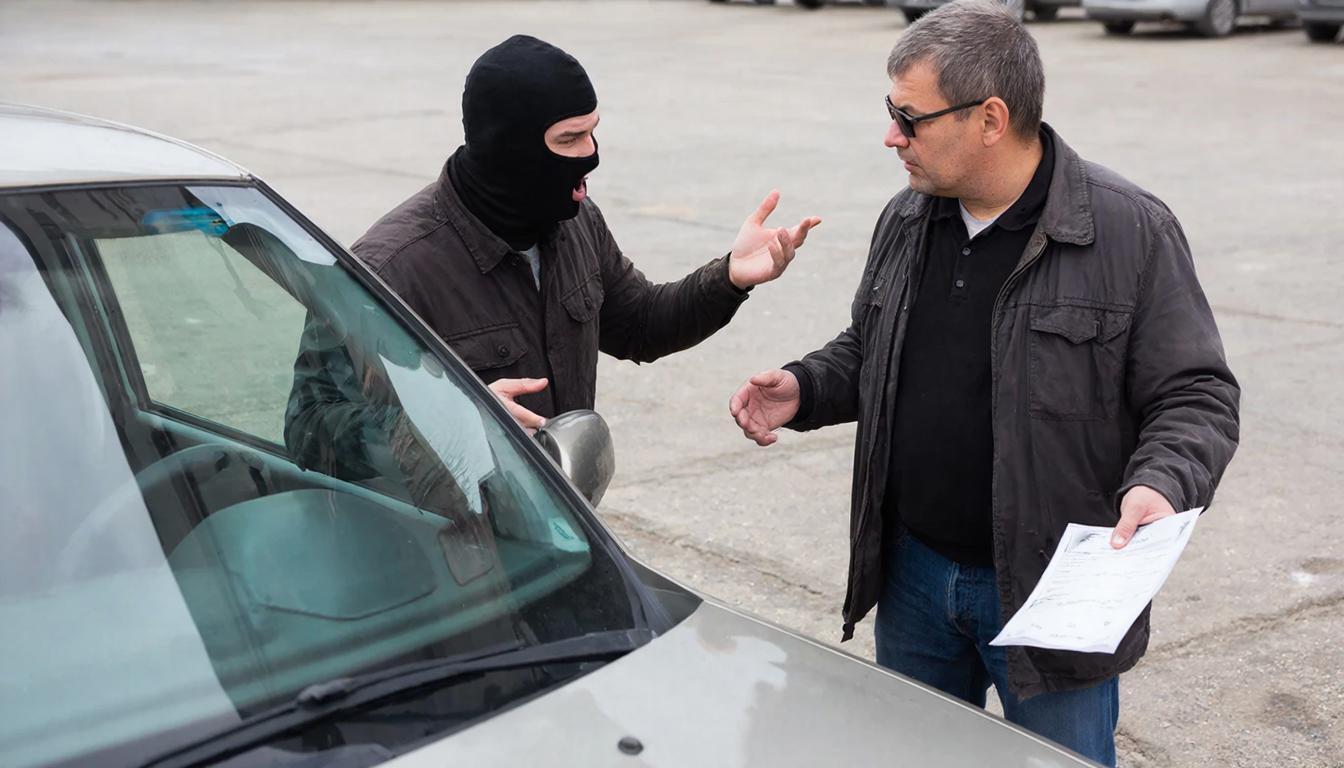
Buying a car from a reseller who has not registered the car in his own name also carries significant risks for the buyer: the car may simply be stolen, and the purchase and sale agreement, drawn up in simple written form, may be fake.
 Fraudster selling car
Neural networks
In particular, in March 2026, the Main Directorate of the Ministry of Internal Affairs for the Nizhny Novgorod Region exposed an attacker who sold a car to his friend. He told the owner of the Opel Astra that the car needed repairs, and he himself filled out a sales contract on her behalf and sold the car to a third party. As a result, the car was seized from the buyer. The unscrupulous seller managed to spend the money received for the Opel.
“The ideal transaction looks like this: the owner sells the car, it is registered in his name with the traffic police, he is personally present at the transaction, presents a passport, which the buyer can check against the Ministry of Internal Affairs database for validity. It is also necessary to check the EPTS and STS for the car. The seller then personally signs the contract. Such transactions can be carried out through a notarized power of attorney, but also after checking it,” concluded Maxim Shelkov, head of Autocriminalist.