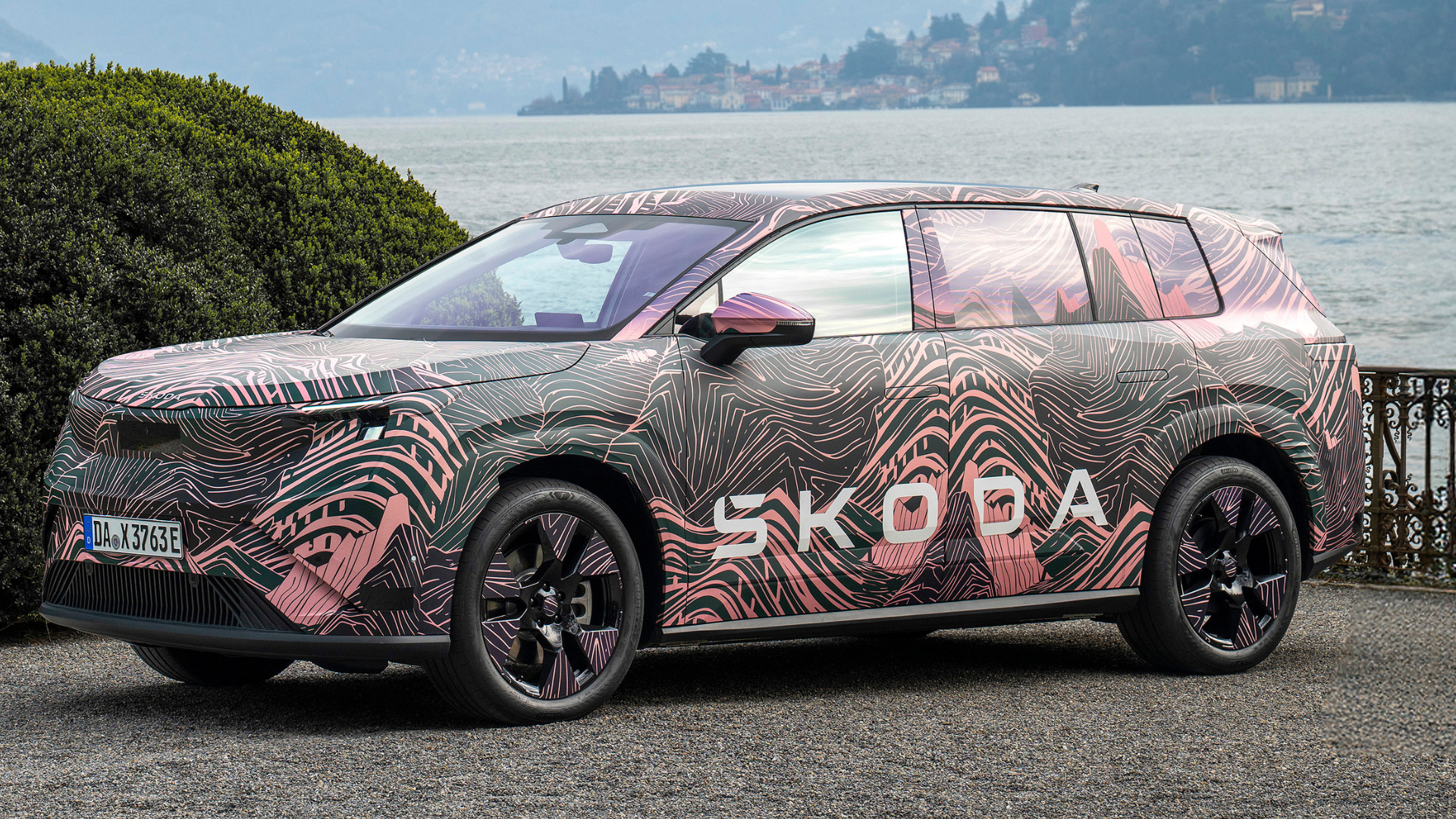
The main feature of a large electric crossover is its low aerodynamic drag coefficient, like a sports car. The Cx of the new product is only 0.249, which brings the new product of the Czech company very close to the Tesla Model Y in this indicator. The Audi Q6 e-tron with its coefficient of 0.28 is left behind.
To achieve this figure, engineers had to reconsider hundreds of parts. One of the main problems is the wheels. Rotating disks create turbulence, and it is dealt with comprehensively. In particular, engineers moved the deflectors closer to the radiator grille. This required lengthening the internal channels, but maintained the purity of the Modern Solid design.
The picture is completed by an integrated wheel arch spoiler, an air deflector under the bottom, an active shutter between the radiators and aerodynamic wheel covers. There is a spoiler on the roof. Skoda emphasizes that aerodynamics affects not only energy consumption and range, but also other characteristics of the car.
“The exterior mirror clearly demonstrates that aerodynamics is not just about reducing drag. Its shape also affects wind noise and how quickly the mirror glass gets dirty while driving,” said Skoda Aerodynamics Coordinator Štěpán Janda.
The full premiere of the model is expected in the second half of 2026. The Peaq will be Škoda’s largest electric car and will likely surpass the Enyaq in terms of range (up to 585 km on the WLTP test cycle).
Previously, the 59-year-old Ford Mustang received a carbon fiber body and a 900-horsepower engine.